























International teachers are crucial to schools worldwide. They help students understand themselves as individuals, bring diverse cultural perspectives, foster global unity, and introduce innovative, multi-method pedagogy to classrooms.
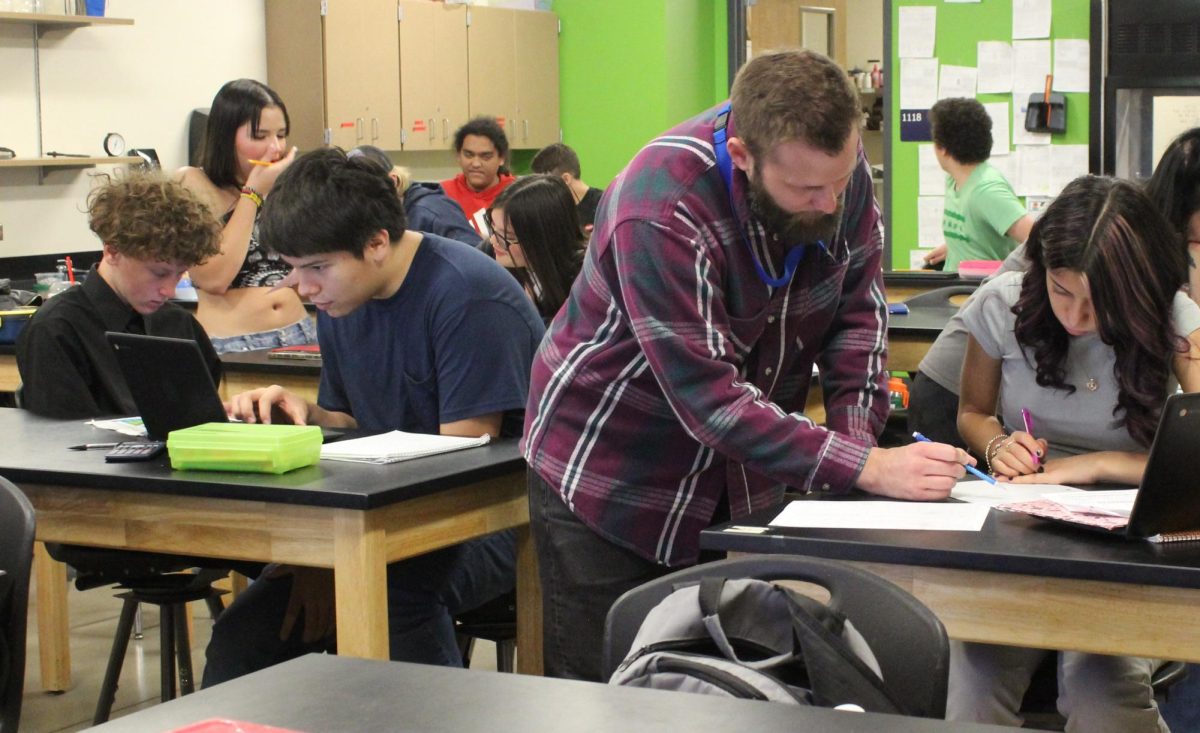
Here at the Englewood Tech Campus, middle school art teacher Almira Winans brings a unique global perspective to students. She is originally from Russia and moved to the United States in 2007. “I went to school for engineering because I wanted to make a lot of money. I know, silly. And then about halfway through, I realized that there was still not enough, like personal satisfaction. So I switched to graphic design, because people were like, you’re not gonna make enough money as an artist. I was like, okay, graphic design, more upscale. Got a degree in graphic design, then, long story short, moved to Colorado,” Winans said. The classes she teaches are Art One, Art Two (advanced art), and Digital Art. “I also teach and get to show my students a little bit of real-world experience.”
She started her teaching career working at an immersion school, because her native language is Russian. She taught kindergarten and first grade. When COVID happened, a lot of people lost their jobs, and things in the world were turned upside down. And I got this opportunity to teach from home at the immersion school, and that was really nice.”
Winans loves telling students about her background. “I’m originally from Petropaulos, Kazakhstan, and when I was young, I doodled a lot. And was always that student in math, they’re like, ‘Why does your paper look like this? Because I have little flowers and characters. And so always really liked art.”
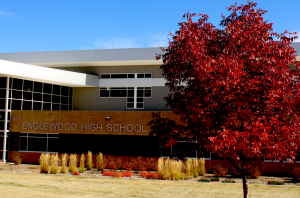
Nate Smith is the principal of Englewood High School. He thinks international teachers add to the school community in a positive way. “I think teachers play an important role around the world. They are making sure the next generation learns the skills they need to be successful, and they’re really the basis of society, helping prepare those that are coming after us to live a successful, happy life.”
According to Unesco, a global shortage of 44 million teachers is projected by 2030, driven by increasing turnover rates that nearly doubled from 4.62% in 2015 to 9.06% in 2022. While demand is high, international educators often face hurdles with visa regulations, local certification requirements, and cultural alignment. Where do most international teachers go? They head to North America and schools in the United States.
International schools globally often feature diverse staff, though with only 11% of school heads coming from non-Western countries.
Winans loves working with older students. “I was looking for a job closer to home, and a position at Englewood Middle School opened up. I interviewed for it and actually accepted the position on my birthday.”
She has a studio at home and loves oil paints. She also does exhibits in galleries. “Now and then, I invite them for extra credit, if it’s close enough, so I kind of get to show them sort of that you can. I love teaching, but I also want to continue developing my own kind of skill set and the type of work that I do for myself.”