





















Colorado is no stranger to dry conditions, but this year, the numbers are raising serious concerns. With snowpack levels far below normal, communities across the Front Range are already preparing for what could be a challenging water season. Our team takes a closer look at how this shortage could impact Englewood, and what students can do right now to help.
PKG
VO:
Picture a drought like a slow leak in a giant water tank that everyone shares. At first, nothing seems urgent. Then sprinklers drip instead of spray, grass turns the color of toast, and daily routines start to shift. For students at Englewood High School, those changes can ripple through both school life and home life in some very real ways.
This year in Colorado, every drop matters. Behind the scenes, engineers like Stephanie Ellis are working to protect one of the state’s most limited resources.
SOT – STEPHANIE ELLIS:
“I’m an engineer with the City of Englewood’s utilities department.”
VO:
Englewood’s Utilities oversees a system with 166 miles of pipe, which feeds lawns, parks, pools, lakes, your home, and your school. Ellis says her work focuses on improving the systems that deliver and protect water across the city.
SOT – STEPHANIE ELLIS:
“I studied environmental engineering at the Colorado School of Mines, and since then, it took me a few years to get into the water field and to begin working here at Englewood. I’ve been working at the City of Englewood for over five years now, and I’m an engineer. I work on capital improvement projects that improve our infrastructure. I also work on our water resources engineering, which is how we get our water and protect the water that we have. And I also have managed a project related to our water efficiency plan and executed our water efficiency plan.”
VO:
Managing water for over 57,000 people is no small task. And this year, that work is more critical than ever.
SOT – STEPHANIE ELLIS:
“Water is a big issue and a big topic, especially this year in Colorado. And every year, Colorado, we’re in the arid west, where there’s a lot less water than there is in other places of the country and other places of the world. And so water is always a very precious resource. But this year we’ve had record low snow pack, and we’re sitting at about 16% of what our normal median snow pack would be. And so this year, there’s a lot less water in the mountains and a lot less water that’s fallen as snow, and now there’s going to be less available to us to use throughout the summer and into the fall.”
VO:
That shortage doesn’t just stay in the mountains; it trickles down into daily life. Ellis says conservation starts at home.
SOT – STEPHANIE ELLIS:
“There are a lot of things you can do to conserve water, so on a personal level and at home, things you can do are just b eing thoughtful about how you use water, taking shorter showers, not running the water more than you need to, and running the dishwasher when it’s full. You can replace things in your home, like shower heads, with lower-flow shower heads. You can also replace your toilets with low-flow toilets. And also be thoughtful about how you water your lawn and when you do it, and there are a lot of ways that that will help conserve water.”
VO:
In some areas, conservation isn’t just encouraged, it’s required.
SOT – STEPHANIE ELLIS:
“For me personally, so at our house, we are going to have mandatory restrictions for our water usage, and so we’re required to reduce our water usage by 20% we have mandatory days for when we’re allowed to water and when we can’t. And we’re also planning on taking a look at our sprinkler system when we turn it on next month, to make sure it’s operating as best as it can be, not spraying on the sidewalks, and making sure we have that system set up to be operating later in the day and at night, when the water is not going to be evaporating right away.”
VO:
Englewood is in a relatively stable position, but that doesn’t mean it’s immune.
SOT – STEPHANIE ELLIS:
“Englewood is very fortunate in that we have good water rights, and in years of drought, we’re very lucky that we’re not facing some of the same water shortages that other communities might be. But that being said, we really want to be good partners to other communities along the front range, and we’re encouraging our customers and residents to try to conserve water as much as they can. We currently have voluntary restrictions in place for watering, and we’re encouraging residents to only water their lawns three days a week, and to follow good practices when it comes to spray, when you apply your or when you operate your sprinkler system, and when you’re making sure all the water is making out to the grass and not on the sidewalk.”
VO:
The city is encouraging people to think about AND be thoughtful about their water usage. In addition, the city is also offering long-term solutions.
SOT – STEPHANIE ELLIS:
“Englewood offers incentives through a program that we partner with Resource Central for residents to replace their lawn with native or low water use plants, as well as native or their turf with native plants, and those native or low water use plants are better suited to live in this arid environment, and so that will help conserve water in people’s homes as well.”
VO:
“For decades, the City of Englewood has relied on the ‘honor system’ for water conservation. But with drought concerns mounting, the impact could change how people spend their summer.
SOT – STEPHANIE ELLIS:
“Yeah, so we will definitely see an impact when it comes to our reservoirs and recreation. This summer, a lot of reservoirs are going to be very low because there’s not as much water stored. I just recently saw that Denver Water is going to have a reservoir that’s in the mountains. They’re actually going to be draining it this summer and moving that water to another reservoir. And so they’re going through a process now of trying to either save or relocate the fish that are currently in that reservoir so people won’t be able to fish there this summer or use it for boating and other recreational purposes. And I think we’ll see similar things in a lot of other places too.”
VO:
Behind the scenes, the city is racing to reduce water loss before it even reaches your home.
SOT – STEPHANIE ELLIS:
“So Englewood has pipes that help bring raw, untreated water to our water treatment plant, and we also have pipes that we use to deliver the treated water to our customers. And a lot of the Englewood system is very old and reaching the end of life. And so one of the cool parts of working for the city of Inglewood is we get to do a lot of projects to help improve that infrastructure and replace it, and by doing that, we’re able to stop or reduce leaks on our pipes.”
SOT – STEPHANIE ELLIS:
“And so we’re going through water main replacement, where we replace the water mains in the street that deliver water to our customers, and that helps reduce the amount of leaks that might happen in our system on the old pipes.”
SOT – STEPHANIE ELLIS:
“In addition, one of the big projects that I’ve been working on is the city ditch piping project. The city ditch is used to bring water from Chatfield reservoir to the water treatment plant. And there are a number of reasons we’re doing this project, but one of them is actually to help reduce water loss by evaporation, because we’ll be taking an open channel ditch and piping it in terms of water shortage and its impact on our pipes, we won’t see a whole lot of changes just because of the drought this year and the amount of water in there. But that being said, it’s an even bigger driver to implement some of these projects that are in our water efficiency plan to try to help reduce water loss and conserve water.”
VO:
And while restrictions are currently voluntary, that could change.
SOT – STEPHANIE ELLIS:
“Yeah, so right now we’re looking at voluntary restrictions, but we’re in the process of taking an ordinance through the city council that would allow us to implement mandatory restrictions if needed. I think if we were to move forward with that, there’s going to have to be more evaluation in terms of what the drought is looking like in the water conditions, as well as what Inglewood would need to do to be prepared for that, such as any additional staffing and steps that we would need to take for that. So, with a little more thought, we’ll have to go into what that’ll look like. But right now, we’re putting in place the ordinance that would give us the ability to do that if we need to.”
VO:
Even schools could feel the effects—but students already have a role to play.
SOT – STEPHANIE ELLIS:
“I’m not sure exactly what the direct impact to schools would be, what mandatory restrictions might look like, since we don’t have that formed quite yet, but regardless of whether or not we’re in mandatory restrictions, I would encourage students and your families to try to conserve water where you can think about it, don’t leave the water running or drinking fountains running. Try to be thoughtful about how you take your showers and what you do at home, and if your family is looking into things that can improve your home or your lawns that will reduce water usage, those are all good things to do.”
VO:
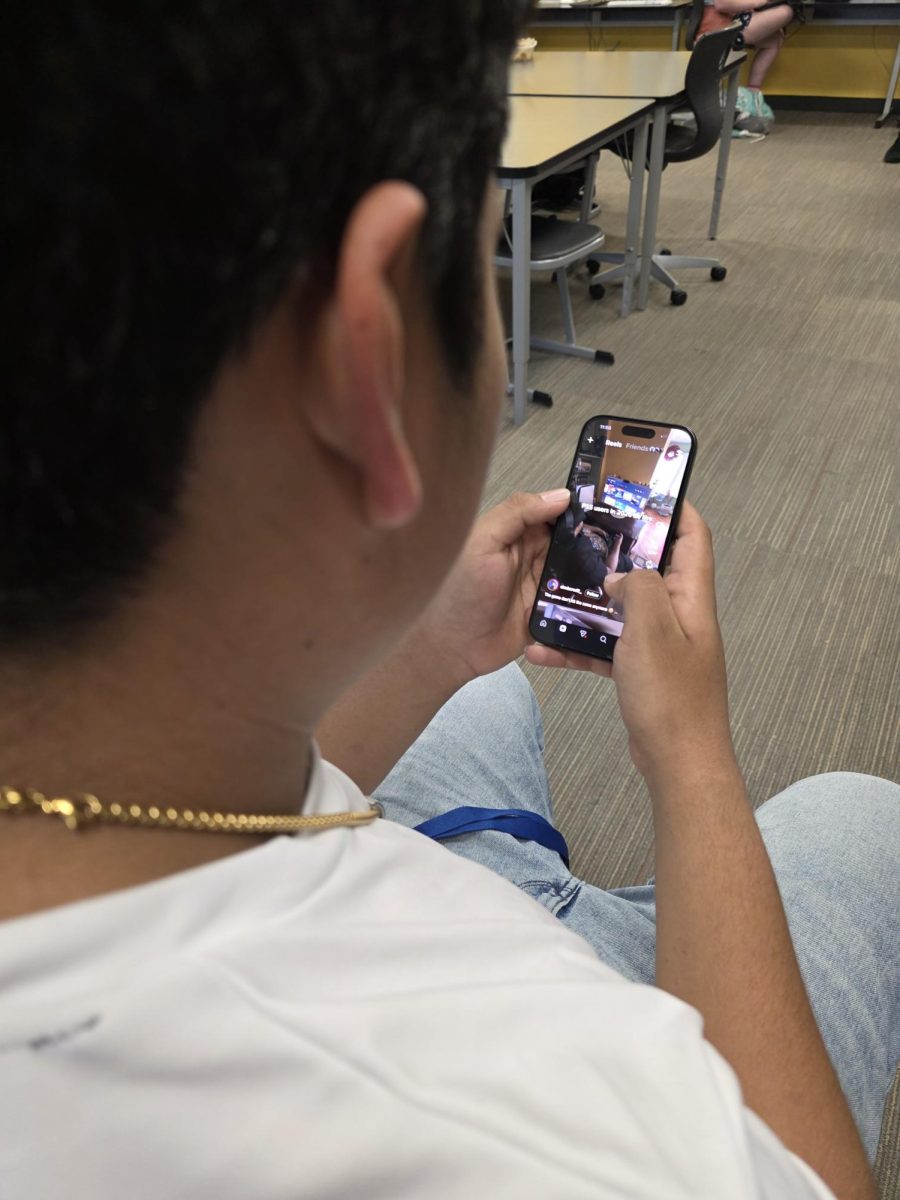
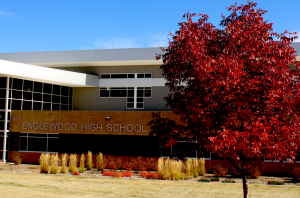
At Englewood High School, some students are already making small changes.
SOT – STUDENT 1:
“I really make sure that when I do the dishes, I don’t let the water run.”
SOT – STUDENT 1:
“I take shorter showers.”
SOT – STUDENT 1:
“I think the water fountains use a lot of water at school because they keep running.”
SOT – STUDENT 2:
” I agree, also the toilets run for longer after they are flushed.”
SOT – STUDENT 2:
“I make sure to conserve water at home.”
VO:
Meanwhile, the city is adapting its own spaces.
SOT – STEPHANIE ELLIS:
“So Englewood parks, over the last few years, have made upgrades to their irrigation systems in some of their parks at the golf course, and they’ve which are going to help conserve water, there’ll be more efficient irrigation systems, and Inglewood parks, in some areas, has also taken out turf, which uses a lot of water, and they put in either native plants or other things to reduce their water usage there. So that was something I thought about earlier.”
VO:
Still, the visual impact may be hard to ignore.
SOT – STEPHANIE ELLIS:
“So I think everybody’s grass is going to look pretty dry this year. We are doing our best to try to work with parks to make sure they have the water that they need, to try to make the parks look nice and be functional for all the different uses that they have. But also, again, we want to be good neighbors to everybody else along the Front Range by trying to conserve water. And so I think everybody this year was just going to have to be understanding that the grass might look a little dry, the reservoirs will be a little low, and that that’s just part of living out here in Colorado and in the West is that some years are just going to be dry.”
TAG
REPORTER:
In a year where the snow never quite showed up, Colorado is being asked to do something simple—but powerful: use less. Because here, every drop doesn’t just disappear… it decides what summer looks like.
Reporting in Englewood, I’m _______.