


























Gas prices in Colorado are approaching $4 per gallon, and students and staff at Englewood High School are already changing how they drive, spend, and plan their daily lives.
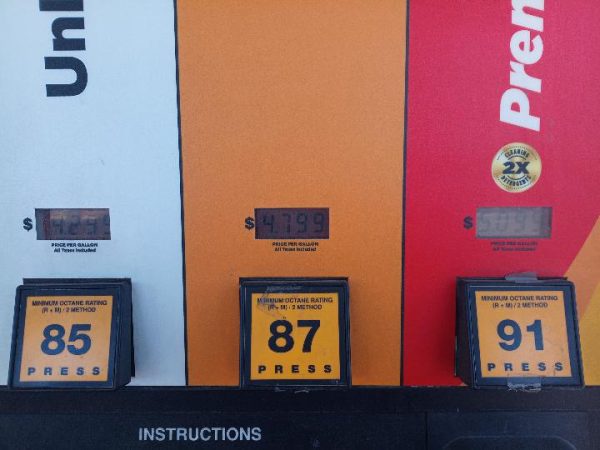
According to AAA, as of late April 2026, the average cost of regular gas in Colorado is approximately $3.85 to $3.95 per gallon. As prices climb, the impact is being felt not only by individual drivers but also by families, educators, and school transportation systems.
Student and Staff Impact
For many students, rising gas prices are influencing everyday decisions.
Junior Jada Torres Robinson drives to school every day in a Nissan Maxima. It averages about 19 miles per gallon. Her round-trip commute is about four miles per day. In February, when she filled her tank, she noticed a difference.
“It cost just over $40, less than $45.”
Robinson says the money for gas comes from her family.
“Because I only worked a summer job and I didn’t have any money saved up during school. My money went to paying my parents back for my car.”
The rising gas prices make her think about activities in a different way.
“Because gas is this expensive. I don’t like going out to lunch anymore. I mean, yesterday, I went 30 minutes away to go have lunch with some family, and it crossed my mind about, like, how much gas it was taking?”
“I like to sit in my car a lot when I get places and watch TikTok. And if I’m doing that, I’m definitely turning off my car right when I get there, instead of, like, leaving it running and stuff. So, which I guess is a good habit to break,” Robinson said.
Staff Feel the Strain of Long Commutes
The impact of rising gas prices extends beyond students to staff members, especially those with longer commutes.
Counselor Sarah Davis lives in Arvada, about 25 miles from Englewood High School.
“I drive a Toyota Forerunner, and my husband drives a Toyota Tundra pickup truck.”
Both cars get average gas mileage. Her husband works from home, and she needs to be at school at 8:00 am.
“It definitely is noticeable in how much we are spending on gas prices, especially with how far of a commute I have.”
Davis has also been paying attention to the broader causes behind rising prices.
“I think there are a lot of political things in the world right now that are causing gas prices to be on the rise.”
Experts point to global factors as a major driver. According to Forbes, gas prices are increasing due to rising crude oil costs, geopolitical tensions in the Middle East, supply chain challenges, and high demand. Although U.S. oil production remains strong, domestic prices are still tied to the global market, where oil is sold to the highest bidder.
Looking ahead, Davis says higher gas prices may influence how her family plans their time.
“So I think it can be very impactful depending on where people have to travel, on how much families are having to spend on gas, that it could take away from other basic needs, if they’re having to put more in their transportation.”
Rising Costs for School Transportation
Gas prices are also affecting school operations, particularly transportation.
Kim Dehaven is the Englewood Director of Transportation. She is in charge of the buses and the drivers for Englewood Schools. The buses use diesel fuel. Over the past few months, she has seen prices rise drastically.
“Over the last three months, diesel costs have gone up due to the cost of oil per barrel. The cost per gallon has increased by $1.60. The cost per gallon in December was $3.39, and currently, we are paying $4.99 per gallon.”
Monthly fuel spending has also risen steadily:
December $1,795.59
January $2,462.95
February $2,895.72
March $3,713.62
Dehaven says there are no immediate impacts to the budget right now, but there is a chance it could be an issue in the future.
“The department is ready and prepared for what is to come. Transportation has a total budget, and if we run over in one category, I can find savings in other categories in transportation.”
However, the long-term outlook remains uncertain. A recent Denver 7 report found that Cherry Creek School District is experiencing a 44 percent increase in fuel costs. Englewood’s increase is even higher, at around 48 percent.
That may be because Englewood, unlike other districts, can negotiate a price or set a contract for fuel, but Englewood does not own gas storage tanks.
One reason for this difference is how the district purchases fuel.
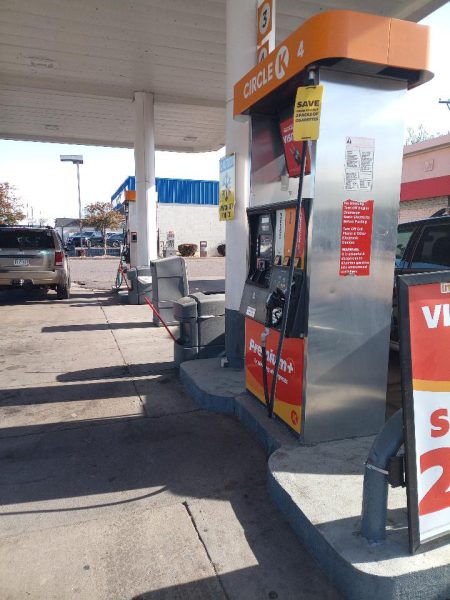
“Englewood Schools fuels buses the same way as our community does. We fuel at the local Circle K gas station on Tufts Ave and Broadway, and we pay the price per gallon for diesel at the cost that day.”
While no immediate changes to routes or activities are planned, continued increases could eventually affect students.
“There’s nothing planned right now. I think that if this were going to be long-term, going for another year, there’s a possibility that I would need to talk with the board and look at whether or not there needs to be a change. So yes, long-term, it could absolutely affect transportation.”
Driving to Work and School
Senior Jose Marmolejo has also felt the financial strain. He drives a Chevy Silverado and recently paid significantly more at the pump.
“Yeah, the other day I filled up, and I was like, almost 120.”
He estimates his truck gets about 25 miles per gallon and says gas expenses affect more than just his commute to school.
“It makes me want to save more money all the time, and makes me not drive my car. That much is changing.”
A Community Adjusting to Higher Costs
From students limiting trips to staff reconsidering summer plans and districts watching budgets closely, rising gas prices are reshaping daily life in the Englewood community.
As costs continue to fluctuate, the question is no longer just how much it takes to fill a tank, but how those prices influence the choices people make every day.