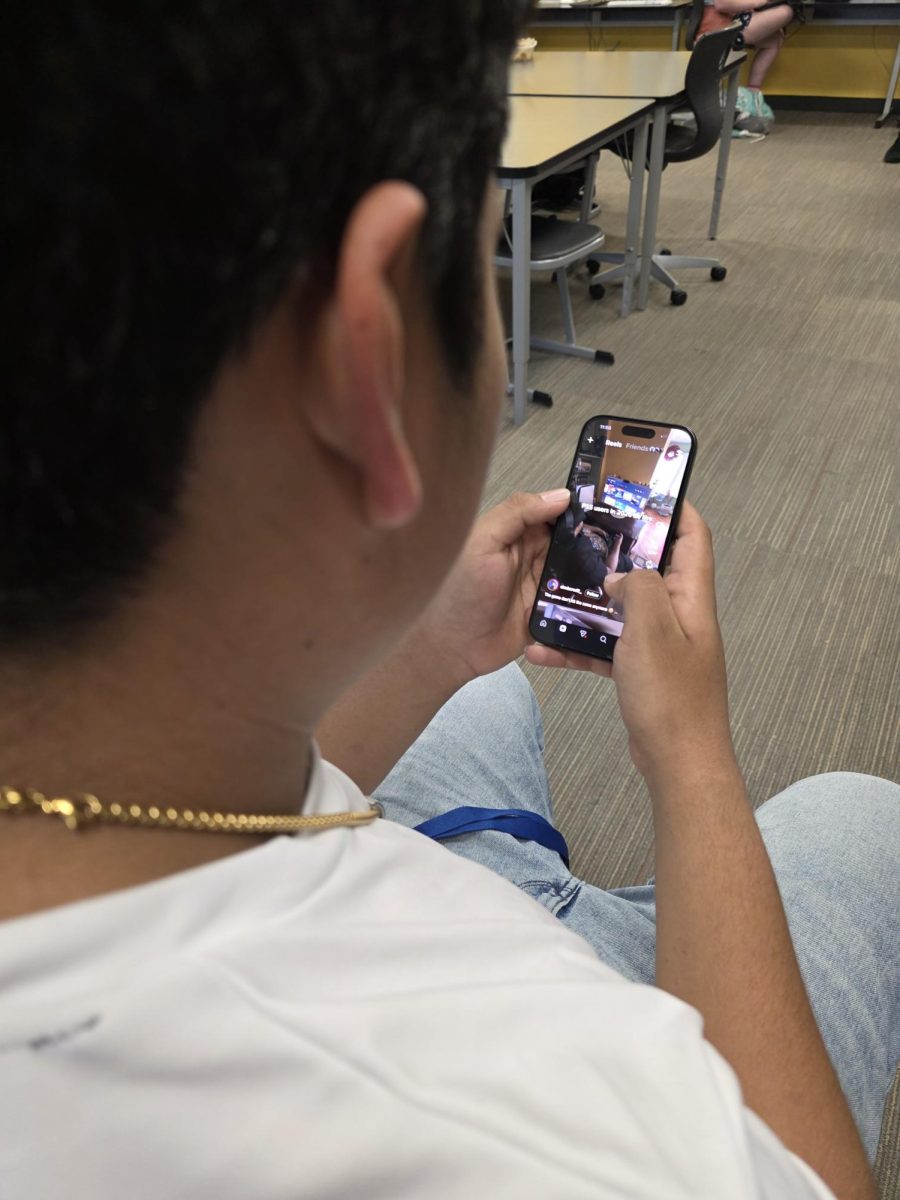

























“It gets pretty annoying because usually I’ll see it during passing periods or if I need to go to the bathroom and there’s a big group of girls vaping and looking at me weird, even though I’m actually trying to use the bathroom for its purpose.” This is from an Englewood high school senior, Ophelia Durgin, who thinks vaping is a problem at the high school and sees evidence of the issue every day, “The smoke fills up the bathroom, so you really don’t have any choice but to be in some way affected by it, and they usually block or fill up multiple stalls. Yes, it’s very annoying.”
Administrators, teachers, and other students urge users to quit, but it can be hard to convince a vaper to change their habits, “It had an impact on the schools specifically because of just how many people are vaping, and how we get conversations about it all the time, and it still doesn’t make a difference in the amount of usage,” Durgin said.
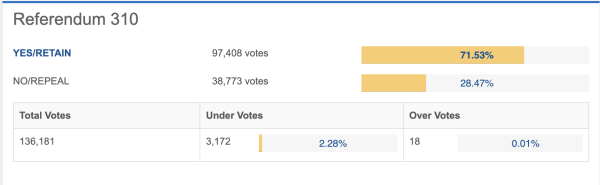
This is a discussion that is happening all over the state of Colorado. On November 4th, 2025, the issue was put to Denver voters. Referendum 310 asked voters to decide whether to keep or repeal the city’s ban on flavored tobacco products, which includes flavored vapes and e-cigarettes.
The language reads: Shall the voters of the City and County of Denver retain ordinance number 24-1765, entitled “A bill for an ordinance amending Chapters 24 and 34 of the Denver Revised Municipal Code regarding the sale of tobacco products, including flavored tobacco products,” which prohibits the sale of flavored tobacco products by retail tobacco stores?
A “yes” vote is a vote to retain a city law that bans the sale of flavored tobacco products within the city.
A “no” vote is a vote to repeal a city law that bans the sale of flavored tobacco products within the city.
According to the Denver Elections Results page, voters decided overwhelmingly to keep the ban, with 71.53% voting yes.
The push to ban flavored vapes began in Colorado in 2022 when Denver Public Schools supported a statewide bill to ban flavored tobacco products. The goal was to lower teen vaping. A similar state bill was considered but failed at that time.
Then, in 2024, the Denver City Council passed a ban on flavored tobacco and nicotine products, including vapes and menthol cigarettes, to reduce teen use. However, opponents, such as vape shop owners, gathered enough signatures to put a repeal measure on the ballot in November 2025.
Colorado vaping stats find the current number of teenagers who vape in schools is 28-30% and about 9% report having vaped in the past 30 days, according to the Colorado Department of Public Health and Environment. The latest statistics are from 2021.
Students at Englewood High School say they hadn’t heard about the ban. Senior Leon Huntington said a ban will have a positive effect on the issue, “I have not heard about Colorado’s attempt at banning vape flavors. It sounds interesting, though. Increasing vaping is concerning. They’re not good for your health or your lungs, and I believe it has negative effects on students.”
Freshman Christopher Gonzalez hates to see teens vaping, “It’s kind of sad to see kids my age smoking.” “Yeah, I agree because one of my friends died of lung cancer, so it’s extra hard for me to see that,” Marvin Bonilla said, ” I’ve heard of the ban. I heard it was banning vape flavors that have the juice that tastes like candies, so it draws in more people.”
Contrasting this, “No, the increase of vaping has not affected me. As long as students stay out of the bathrooms and can always say no, it’s alright. Banning flavors? Yeah, I’ve heard of that from Mr. Lammers; he’s talked to us about that,” freshman Chris Salitros said.
“I’m talking about this with my students because it’s one of the drugs that is most prominent among high school and middle school students. It also contains a high dose of nicotine, which means that it’s addictive. And what we’re starting to see is a lot of harmful health effects associated with vaping, and a lot of kids don’t recognize or realize those harmful effects. I have heard about the ban, and I was going to vote to ban them,” health teacher Lance Lammers said, “I think the research shows that a lot of kids start with flavored products and then they end up with other addictions down the road, and so this takes away some of the allure to kids to use their products.”
Research by reporters at the Denverite found that Denver is the 14th city in Colorado to pass restrictions related to products that contain nicotine. Also on the list: Aspen, Boulder, Breckenridge, Carbondale, Dillon, Eagle, Edgewater, Frisco, Glenwood Springs, Golden, Keystone, Silverthorne, and Snowmass Village.
Around the country, Tobacco Free Kids reports, 7.8% of high school students and 3.5% of middle school students, over 1.6 million kids, were current e-cigarette users. Nationwide, nearly 400 municipalities and six states restrict the sale of flavored tobacco products.