



























Should Teenagers Get to Choose Their Schools?
“I don’t really remember the names of my kindergartens or before middle school, but I know it was around five that I moved, and then middle school. I think it was only three. I went from Aurora, then to Cherry Creek, then back to Aurora, and now Englewood.”
This is how one Englewood High School freshman described their journey through Colorado schools.
Englewood is known as a transient school. Students come and go throughout the year. Some have moved multiple times, while others have been part of Englewood Schools since pre-K and will likely graduate from Englewood High.
This raises a big question: Should teenagers be able to choose their schools, or should that decision be left to their parents or guardians? In Colorado, parents have the legal right to choose where their children go to school. But many high schoolers believe they should have a say, especially as they get older.
To explore this question, we interviewed two EHS students with very different experiences.
Freshman Jose Mendez has moved many times. “I think about 10 times,” he said when asked how often he’s changed schools. Each move came with challenges. “It’s kind of stressful because I can’t keep the same friends I used to have, and also because I can’t really build emotions without breaking after two or three years,” Mendez said.
Still, he understands his parents’ decisions. “I don’t think they really realize how much it kind of affects me, because, like, they’re really thinking about how to help the family and a lot of other stressful things that come into play. So I usually just keep my things to myself or in how I feel.”
On the other hand, sophomore Victoria Matos has spent her entire life in the Englewood district. She said staying in one place has had mostly positive effects. “A lot of the time it has been really good,” Matos said. Students like her get to keep their friends, know the area, and avoid the stress of moving. But she also admits there are drawbacks, like not meeting new people or seeing different places.
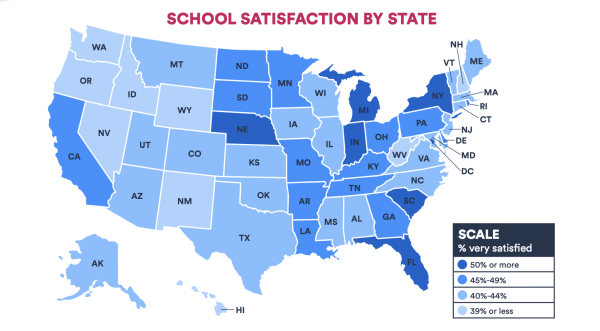
Research backs up Mendez’s feelings about the stress of moving. According to a study cited by MDMBlaw, frequent moves during childhood are linked to higher risks of depression in adulthood. “The upheaval associated with moving, leaving behind friends, familiar surroundings, and routines, can be traumatic, particularly for introverted children who may find it more difficult to adjust to new environments,” the article explained.
Mendez agrees that moving can be unpredictable. “Like you get to choose where to move, but also, like, it’s stressful when you don’t know what school you’ll be moving to or where you’re going to go next,” he said.
When it comes to deciding who should choose a student’s school, opinions vary. “I would say, either between middle school or more into high school,” Mendez said, suggesting students should have input as they get older.
Matos has a different perspective. “It doesn’t really matter to me. I kind of like it when my parents choose for me what schools I go to,” she said. Still, she believes students should be given the chance to choose.
Whether students move frequently or stay in one place, each experience shapes how they view education and independence. As Englewood continues to grow and welcome new students, the question remains: Who should get to decide where a teenager learns and builds their future?